Family Forest Carbon Program Review: Should You Enroll Your Woods?
If you own forestland, you’ve probably seen the ads: “Get paid for growing trees!” The Family Forest Carbon Program promises $200-300 per acre over 20 years (total) just for managing your forest in climate-friendly ways. Sounds almost too good to be true, right?
Well, here’s the thing: the payments are real and guaranteed. But whether this program makes sense for you—and whether it’s actually helping the climate—is a more complicated story. Let’s break down what you’re really signing up for.

At a Glance: What You Need to Know
What the Family Forest Carbon Program Pays:
- $200-300 per acre total over 20 years (varies by region and practice)
- Payments are guaranteed regardless of whether carbon credits sell
- 20% comes upfront in Year 1, rest spread over the contract
- Premium option adds 20% more if you get a USDA Farm & Tract Number
What You’re Committing To:
- 20-year contract (30 years for some reforestation practices)
- Limited harvesting: max 25% basal area removal per cut
- Can’t harvest more than 15% of total property at once
- Need a forest management plan (they’ll help you get one)
- Must give 30-day notice before any harvest with forester reports
The Good:
- Payments guaranteed regardless of timber markets
- Free forest management planning and professional forester access
- Works with most state forest tax programs
- No upfront costs to enroll
- Retain full ownership and can sell property (contract transfers)
The Bad:
- Severely restricts your harvesting options for 20 years
- What happens after 20 years? Nobody knows
- The carbon credits themselves are scientifically questionable
- You’re probably already managing this way if you’re interested
The Verdict: If you’re a conservation-minded landowner who wasn’t planning to harvest much anyway, this is basically free money for doing what you’d do regardless (which actually discredits the program’s actual product). If you view your woods as a timber investment or might need harvest income in the next 20 years, the restrictions probably aren’t worth it.
DIY Forest
Management
For Landowners
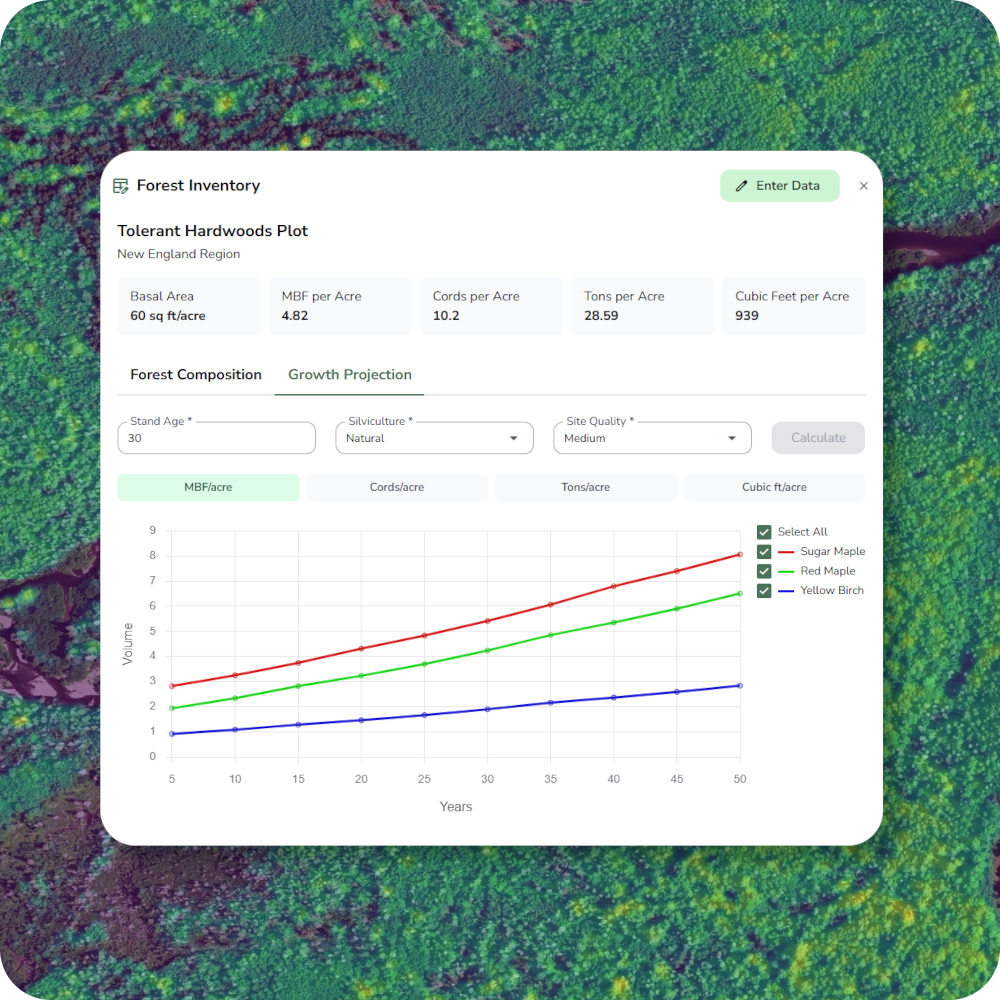
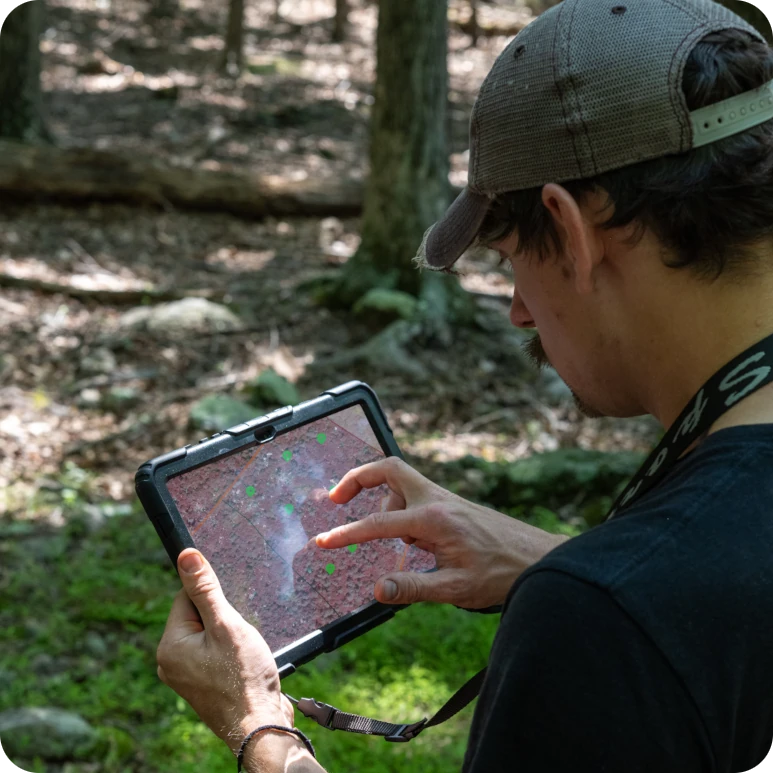
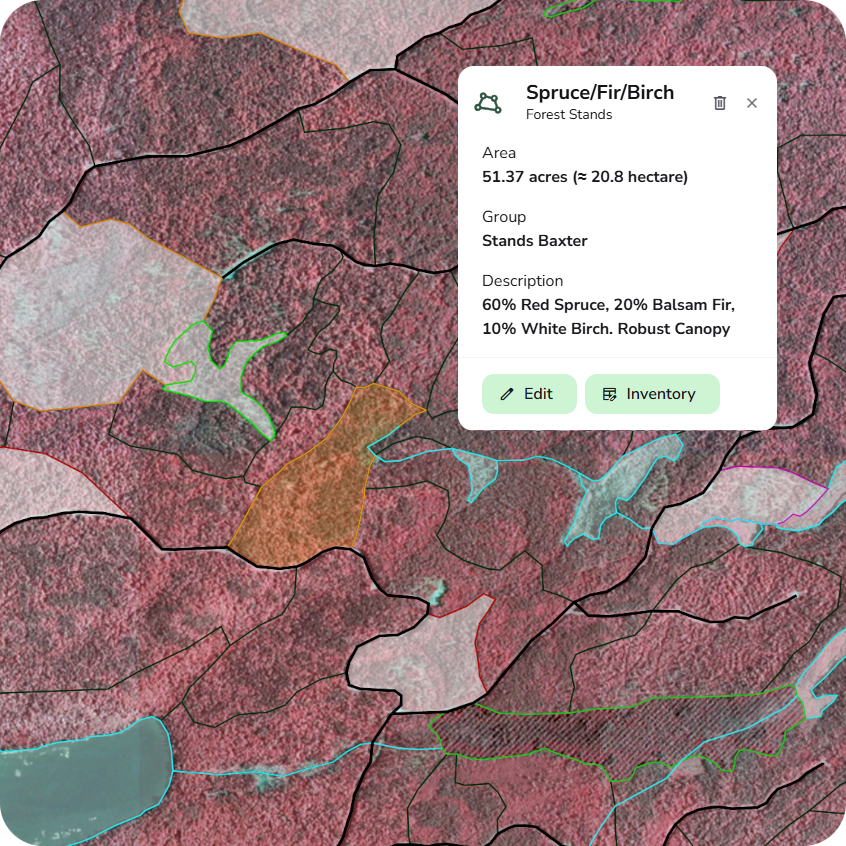
SilviCultural is the online forest management platform that empowers landowners to take control of their land. With mapping, advanced multispectral and LiDAR data and imagery, easy-to-use inventory estimates and more, SilviCultural is everything you need to become your own forester.



The Money: What You Actually Get
Let’s start with the most important part: the payment structure. In the Northeast (Maine, New Hampshire, Vermont, Massachusetts, New York), you’ve got two options:
“Grow Older Forests” pays $300 per acre. The catch? You’re basically agreeing not to do commercial timber harvests for 20 years. You can still cut firewood, do salvage after storms, and handle pest issues, but regular timber sales are off the table. The program’s own materials note this practice “is generally not compatible with state forestland property tax programs” because most state programs require periodic harvests to prove you’re managing timber, not just banking a tax break.
“Enhance Your Woodland” pays $200 per acre and gives you more flexibility—you can harvest up to 25% of your basal area at a time. This works fine with state forest tax programs.
In the Appalachian and Midwest regions (14 states from Pennsylvania to Minnesota), there’s a “Growing Mature Forests” practice paying $120-400 per acre depending on how much timber you’re already carrying. More stocking equals higher payments.
The payments hit your account like this: roughly 20% in Year 1 as a nice upfront check, then smaller annual payments, with a final payment when the contract ends. And here’s what’s actually good about about the Family Forest Carbon Program: these payments are guaranteed. It doesn’t matter if the carbon credits sell or not, if carbon prices crash, or if the whole carbon market collapses. They’re paying you either way.
For a 100-acre property on the “Enhance Your Woodland” plan, that’s $20,000 over 20 years, or about $1,000 per year on average. Not exactly retirement money, but not nothing either.
The average enrolled property is 137 acres, which at $200-300 per acre total would be $27,400-41,100 over the contract period. The program has already paid out $7 million to landowners from the $38 million committed, so the checks are real and clearing.
There’s also a “Premium” option that bumps payments up 20% if you get a free USDA Farm Service Agency Farm & Tract Number. That could bring your 100-acre payment to $24,000 instead of $20,000. The premium also front-loads more money into early years rather than spreading evenly, which might matter if you prefer cash now versus later.
The Restrictions: What You’re Actually Agreeing To
Here’s where it gets real. That 25% basal area limit is more restrictive than it might sound. If you’ve got mature timber and were planning a solid harvest in 10 years to pay for a new roof or college tuition, you’re capped at taking a quarter of what’s there. And you can only harvest 15% of your total enrolled property at once, so even spreading cuts across different stands has limits. Moreover, most modern timber harvest trails remove at least 20% of basal area, so I question the viability of any harvest.
Every time you want to cut, you need to give 30 days notice with a pre-harvest report from a forester showing basal area measurements, tree diameters, species composition, and more. After the harvest, you need another report within 30 days. And here’s the kicker: even if you ARE a forester, you can’t do your own reports. You need to hire someone independent.
The 20-year contract follows the property, not you. If you sell, the new owner inherits the contract (with their agreement). If you die, your heirs get it. Early termination comes with financial penalties, though natural disasters that aren’t your fault won’t penalize you.
The Big Question: Who Is This Really For?
This is where we get to the heart of it. Close your eyes and imagine a landowner who’s really excited about enrolling in a forest carbon program. What do they look like? How do they think about their land?
I’m guessing you’re picturing someone who views their forest primarily as a natural treasure, not a timber investment. Someone who probably drinks their morning coffee from a mug with an NPR logo or Sierra Club membership. Someone who was never planning to do heavy harvesting anyway.
And that’s the problem with the carbon credits themselves—not with the program paying you, but with whether these credits represent real climate benefits.
The Carbon Credit Problem: Are These Helping the Climate?
Here’s the uncomfortable truth: multiple peer-reviewed scientific studies have found that improved forest management carbon credits like the type FFCP offer don’t actually reduce atmospheric carbon dioxide in any meaningful way.
A 2023 study in Nature Communications looked at 90 forest carbon projects across the US and found no statistically significant evidence that these programs changed management practices. A 2024 study analyzing carbon credits broadly concluded that less than 16% of credits represent real emission reductions. Another study using satellite data in California found no evidence that the state’s forest offset program influenced land management at all.
The core issue is called “adverse selection.” Programs like the Family Forest Carbon Program attract landowners who were already going to manage conservatively. They compare your enrolled forest to “similar” unenrolled forests in the FIA database to claim you’re storing extra carbon. But if the main difference between enrolled and unenrolled properties isn’t the program itself but rather the type of landowner—conservation-minded versus timber-production-focused—then the comparison is meaningless.
Think about it this way: if everyone who enrolls in FFCP was already planning to let their forest grow old and wasn’t going to do heavy harvesting, then paying them to do what they were going to do anyway doesn’t create additional carbon storage. It just transfers money to conservation-minded landowners while generating credits that corporations buy to “offset” their emissions without actually reducing atmospheric carbon.
The 20-year contract term makes this worse. Carbon credits are supposed to represent 100+ years of carbon storage. After your 20-year contract ends, what happens? Maybe you harvest. Maybe your kids sell to a developer. Maybe a timber investment company buys it and clearcuts. Nobody knows. FFCP hopes the forest will be more valuable after 20 years so you’ll keep managing sustainably, but that’s speculation, not a guarantee.
There’s also the issue of what would happen to harvested wood if you did harvest. When you do cut trees, that carbon doesn’t just disappear—it goes into lumber, furniture, houses. My parents’ house was built in 1830, and those beams are still storing carbon from trees cut almost 200 years ago. But carbon accounting models often assume harvested wood releases carbon quickly, which isn’t accurate for long-lived wood products. The models don’t properly credit the carbon storage in buildings and products, which makes the “don’t harvest” strategy look better than it really is.
And then there’s “leakage”—if you don’t harvest your timber, someone else harvests theirs to meet demand. Studies suggest that 75-84% of “protected” carbon in these programs just gets released somewhere else through market effects. If Pennsylvania landowners don’t sell hardwoods, buyers get them from West Virginia or Canada instead. The carbon gets released either way, just from different trees. The FFCP model attempts to remedy this using an FIA baseline, but that does nothing to account for the selection bias in enrollees.
The Practical Take: Should You Do It?
Let me be direct about this. Whether the Family Forest Carbon Program makes sense for you depends entirely on what you were planning to do anyway.
You’re a good candidate if:
- You view your forest primarily as wildlife habitat, natural beauty, or legacy land
- You weren’t planning significant timber harvests in the next 20 years
- You don’t have forest tax programs that require periodic harvesting (or choose “Enhance Your Woodland”)
- You’d like some supplemental income without changing your management
- You could use help getting a forest management plan and professional forester guidance
In other words, if you’re the kind of landowner I described earlier—coffee mug with a conservation nonprofit logo—this is basically free money for you. You’re getting paid for doing what you’d do regardless (nothing). The carbon credits might be completely fake, but the payment to your bank account is real.
You should probably skip it if:
- You view your timber as a financial investment or retirement fund
- You might need harvest income for major expenses in the next 20 years
- You’re actively managing for timber production
- You’re enrolled in state forest tax programs that require periodic harvests (and considering “Grow Older Forests”)
- Your kids might want to sell or develop the land
The restrictions aren’t worth it if you’re timber-focused. You’re locking yourself out of harvest opportunities during what might be excellent market conditions. That 100-acre property generating $1,000/year in carbon payments might have $50,000+ in harvestable timber that you can’t touch.
Basic Eligibility: Can You Even Enroll?
Before you get too deep into deciding, here are the basic requirements:
Property requirements:
- Minimum 30 contiguous forested acres (no upper limit for most practices)
- Naturally regenerated forest, not plantations
- Must be in one of the 19 eligible states and eligible counties
- You need legal authority to harvest timber
Regional specifics vary: Northeast properties need northern hardwoods (maple, beech, birch, ash) making up at least 50% of your basal area and minimum stocking levels around 60-90 square feet per acre. Other regions have different requirements.
You’re automatically disqualified if:
- You have conservation easements or other legal restrictions preventing harvest
- You’re already enrolled in another forest carbon program
- Your property is primarily coniferous plantation
The enrollment process itself is pretty straightforward: you apply online, they review your property, a forester comes out to verify it meets requirements and establish baseline measurements, and if approved, you sign the contract and start receiving payments. There are no upfront costs to you—they cover the forester visit and management plan development.
As of early 2025, over 1,000 landowners have enrolled across 143,000 acres, mostly in Pennsylvania (the first pilot state with 237 landowners). The program is growing rapidly, but still represents a tiny fraction of eligible forestland.
The Co-Benefits: What You Get Beyond Cash
One genuinely good thing about FFCP: 77% of enrolled landowners had no forest management plan before joining. The program provides free management planning and connects you with professional foresters. Even if the carbon credits are scientifically dubious, getting forestry expertise is valuable.
If you’ve been meaning to develop a management plan but haven’t gotten around to it, and you were going to manage conservatively anyway, FFCP gives you a reason to finally do it—and pays for it. That has real value independent of carbon markets.
The Timber Stand Improvement Angle
One thing the program mentions is using payments for Timber Stand Improvement (TSI) work—things like releasing crop trees, managing competing vegetation, and improving overall forest health. If you weren’t going to invest in TSI because the return on investment seemed questionable, carbon payments could make these practices economically viable.
For a conservation-minded landowner who wants to improve their woods but lacks funds, FFCP payments could enable better stewardship. You’re essentially getting paid to invest in forest health improvements that benefit wildlife, water quality, and long-term forest productivity even if they never produce timber revenue.
My Take: The Real Purpose of This Program
I’ll be honest with you. In my view, forest carbon credits generally are what I’d call “NFTs for tree nerds”—a financial instrument that mostly serves corporate greenwashing rather than genuine climate action. The scientific evidence suggests these credits don’t represent real emission reductions, and they likely never will.
FFCP is run by the American Forest Foundation and The Nature Conservancy—both legitimate conservation organizations, not fly-by-night carbon brokers. They’re buying carbon credits from you and reselling them to corporations like Amazon, Microsoft, and 3M who want to claim carbon neutrality. The program started as a Vermont pilot in 2019 and has expanded to 19 states by 2025, with over $38 million committed to landowners.
But that doesn’t mean FFCP is necessarily bad for YOU as a landowner. If you’re already managing conservatively, getting paid for it makes sense even if the climate benefits are questionable. You’re not causing harm by enrolling. You’re just accepting payment from a system that’s going to generate credits whether you participate or not.
The corporations buying these credits would purchase offsets from somewhere. At least FFCP puts money directly in family landowners’ pockets and supports professional forestry services. That’s better than money going entirely to brokers and middlemen in some other carbon program.
Think of it this way: if someone offered to pay you $20,000 over 20 years to keep doing exactly what you were planning to do anyway, would you turn it down on principle? Probably not.
The Bottom Line
The Family Forest Carbon Program delivers exactly what it promises landowners: guaranteed payments for practicing conservation-friendly forestry. The payments are real, the costs are low, and the restrictions only matter if you were planning to harvest anyway.
The carbon credits generated probably don’t represent meaningful climate benefits based on current scientific evidence. But that’s not really your problem as a landowner. You’re not making guaranteeing anything about what your forest is doing—the Family Forest Carbon Program is. You’re just accepting payment for managing your land.
If you’re a conservation-minded landowner who views your forest as a legacy to protect rather than a timber investment to liquidate, FFCP offers free money for doing what you’d do regardless, plus professional forestry support you might not otherwise access. That’s not a bad deal.
If you’re timber-focused or might need harvest flexibility, the restrictions aren’t worth the modest payments.
Know yourself, know your goals, and make the decision that aligns with what you actually want to do with your land. Just don’t fool yourself into thinking you’re saving the planet—you’re accepting payment from a system that’s helping corporations avoid reducing their actual emissions.