QMD: A Simple Guide to Quadratic Mean Diameter in Forestry
If you’re involved in forestry or timber management, you’ve likely encountered the term QMD. But what is QMD, and why does it matter for managing forests effectively? In this guide, we’ll break down this important forestry metric in simple terms.
What is QMD?
QMD stands for Quadratic Mean Diameter, a statistical measure used in forestry to represent the average diameter of trees in a stand. Unlike a simple arithmetic average, QMD provides a more accurate representation of the trees in your forest, especially when calculating total basal area or estimating timber volume.
The quadratic mean diameter is calculated by taking the square root of the average of the squared diameters of all trees in a sample area.
Why QMD Matters in Forestry
Understanding QMD is crucial because it helps forest managers:
- Estimate timber volume more accurately than simple averages
- Calculate basal area for a stand of trees
- Make informed harvesting decisions based on tree size distribution
- Track forest growth over time
- Compare different forest stands objectively
How QMD Differs from Average Diameter
You might wonder: what is QMD’s advantage over a regular average? Here’s a simple example:
Imagine you have three trees with diameters of 10, 20, and 30 inches.
- Simple average: (10 + 20 + 30) ÷ 3 = 20 inches
- QMD: √[(10² + 20² + 30²) ÷ 3] = √(466.67) = 21.6 inches
The QMD is higher because it gives more weight to larger trees, which is important since bigger trees contain disproportionately more volume and basal area.
When to Use QMD
Forest professionals use QMD in several situations:
Timber cruising: When estimating the volume of harvestable timber in a forest stand, QMD helps provide more accurate volume calculations.
Stand inventory: QMD is a standard metric in forest inventory reports, giving stakeholders a clear picture of stand structure.
Growth modeling: Tracking QMD over time helps predict how a forest will develop and when it will reach harvest maturity.
Silvicultural planning: Understanding what is QMD in your forest helps determine the best thinning or harvesting strategies.
How to Calculate QMD
While the concept might sound complex, calculating QMD follows a straightforward process:
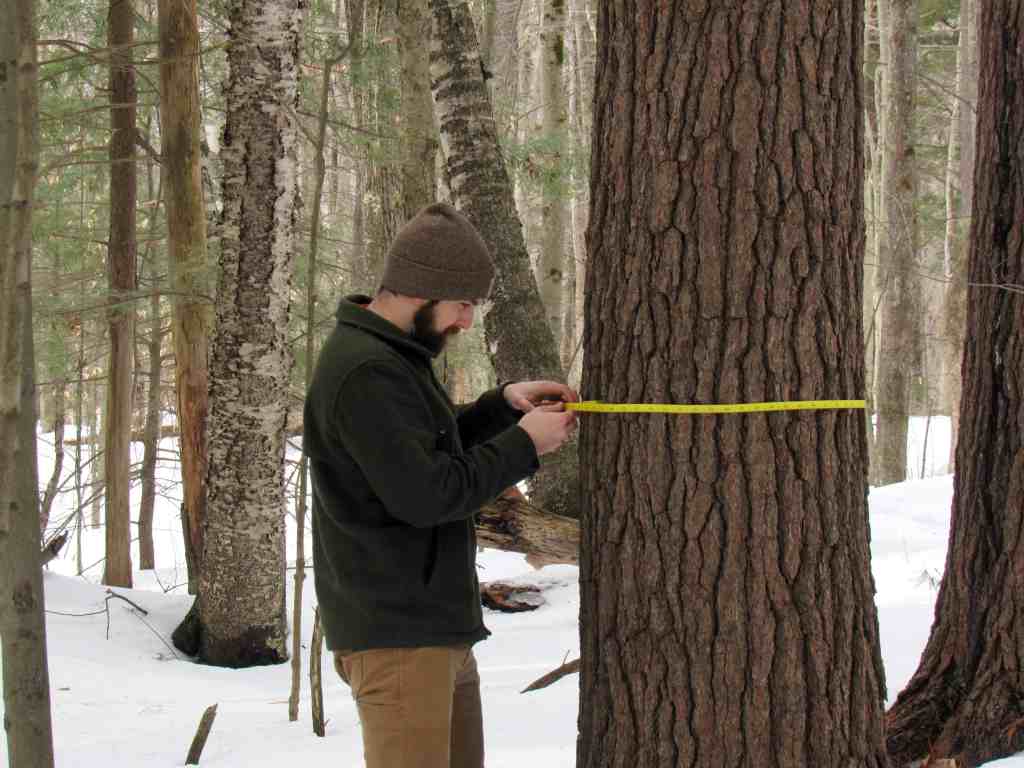
- Measure the diameter at breast height (DBH) of all trees in your sample plot
- Square each diameter measurement
- Add all the squared values together
- Divide by the number of trees
- Take the square root of the result
The formula is: QMD = √(Σd² / n)
Where d represents individual tree diameters and n is the number of trees.
QMD in Practice
Now that you understand QMD here’s how it applies in real-world forestry:
A timber company surveying a pine plantation measures 100 trees and calculates a QMD of 14 inches. This single number tells them the stand is approaching commercial thinning size and helps estimate potential timber yields using standard volume tables.
Forest managers can also use QMD to compare different stands. A stand with a QMD of 18 inches is generally more mature and valuable than one with a QMD of 10 inches, assuming similar species and site conditions.
Benefits of Using QMD
Understanding what is QMD and applying it offers several advantages:
- More accurate volume estimates compared to simple diameter averages
- Better representation of stand structure and timber value
- Standardized metric recognized across the forestry industry
- Useful for modeling and predicting forest growth
- Helps optimize harvest timing for maximum returns
QMD and Forest Management Software
Modern forestry technology has made calculating QMD easier than ever. Most forest inventory software and apps automatically calculate QMD from your diameter measurements, eliminating manual calculations and reducing errors.
Common Questions About QMD
Is QMD always larger than the arithmetic mean? Yes, QMD is always equal to or greater than the simple average diameter, with the difference becoming more pronounced when tree sizes vary widely.
What units is QMD measured in? QMD is typically measured in inches in the United States or centimeters in countries using the metric system, matching the units used for diameter measurements.
Can QMD be used for all tree species? Yes, QMD is a universal metric applicable to any tree species or mixed-species stands.
Conclusion
So, what is QMD? It’s an essential tool in the modern forester’s toolkit—a more accurate way to characterize the average tree size in a stand compared to simple averages. By giving appropriate weight to larger trees, QMD provides better estimates for timber volume, basal area, and stand value.
Whether you’re managing a small woodlot or thousands of acres of commercial timberland, understanding and using QMD will help you make better-informed decisions about harvest timing, thinning operations, and overall forest management strategy.
The next time you’re conducting a forest inventory or reviewing a timber cruise report, you’ll know exactly what QMD means and why it’s such a valuable metric in forestry.